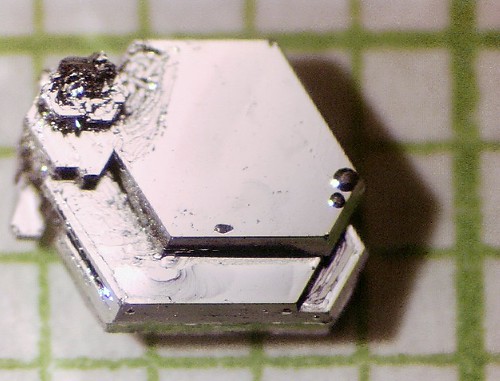
rare crystal structure has been briefly observed in silver, mimicking patterns seen in radioactive polonium. This intriguing phenomenon opens new avenues for scientific exploration.
Understanding Crystal Structures
The study of crystal structures has long captivated scientists, offering insights into the properties of various materials. Recently, researchers discovered that silver can briefly form a rare crystal structure similar to that of radioactive polonium. This finding is significant as it enhances our understanding of how metals behave under different conditions.
Crystal structures are defined by the arrangement of atoms within a material. In the case of silver, the formation of this elusive structure occurs under specific circumstances, which can illuminate the underlying mechanisms that govern its properties. The research highlights several key aspects of crystal structures:
- Atomic Arrangement: The spatial organization of atoms can influence a material’s strength, conductivity, and reactivity.
- Phase Transitions: Changes in temperature and pressure can lead to the formation of different crystal structures.
- Material Properties: Understanding these structures allows scientists to predict how materials will react in various applications.
By studying this rare crystal structure, researchers are uncovering valuable insights that could have implications for the development of new technologies and materials.
The Science Behind Silver
Recent studies have unveiled fascinating insights into the properties of silver, particularly when it briefly forms a rare crystal structure akin to that of radioactive polonium. This discovery sheds light on the fundamental aspects of metallic bonding and crystal formation.
The unique crystal structure of silver during specific conditions has prompted scientists to explore its implications. Notably, the interatomic distances and bonding angles in this rare configuration differ significantly from those in the more common arrangements of silver. This variance can influence the material’s conductivity and reactivity, which are critical in applications ranging from electronics to jewelry.
Researchers have employed advanced techniques such as x-ray diffraction and electron microscopy to analyze the fleeting formation of this crystal structure. The findings suggest that the transformation may occur under extreme pressures or temperatures, conditions that are often found in natural phenomena like meteor impacts.
As scientists delve deeper into the characteristics of this rare crystal structure, they stand to gain not only a better understanding of silver itself but also insights applicable to other metals and materials.
Implications of Rare Structures
The discovery of a rare crystal structure in silver has significant implications for both scientific research and industrial applications. By revealing how silver behaves under extreme conditions, this finding challenges existing theories and opens new avenues for exploration. Researchers are particularly excited about the potential for enhancing the performance of silver in various fields.
One notable implication is in the field of electronics. The unique properties associated with this rare crystal structure could lead to more efficient conductive materials, which are essential in the development of advanced electronic devices. Furthermore, the insights gained from studying this structure may inform the design of new alloys that leverage silver’s strengths.
In addition to its applications in technology, understanding this rare crystal structure could improve our grasp of other materials as well. The methodologies used to analyze silver may be applicable to other metals that exhibit similar behaviors. As researchers continue to explore these implications, the findings could redefine how we view the elemental properties of silver and its role in material science.
- Electronics: Potential for more efficient conductors.
- Alloy Design: Informing the creation of new materials.
- Material Science: Broader implications for similar metals.
Comparative Analysis with Polonium
Recent studies have highlighted the intriguing similarities between the rare crystal structure of silver and that of polonium, a radioactive element. This comparative analysis sheds light on the unique properties that emerge during the transition phases of these materials.
Both silver and polonium exhibit distinct crystal arrangements under specific conditions, leading to the formation of rare crystal structures that are not commonly found in other elements. The similarities in their crystallography can be attributed to their similar atomic radii and bonding characteristics.
Researchers conducted a thorough examination and identified several key comparisons:
- Atomic Arrangement: The lattice structure of silver closely mirrors that of polonium, suggesting potential parallels in their physical properties.
- Phase Transition: The transition from a stable to a rare crystal structure occurs under comparable temperature and pressure conditions.
- Electronic Properties: Both elements share unique electronic configurations that influence their metallic behaviors.
This analysis not only enhances our understanding of silver’s crystal structure but also opens avenues for further exploration into the behavior of other elements that exhibit similar characteristics.
By CORE-Materials via Openverse